The independent guide to the archipelago
Cape Verde: the travel guide
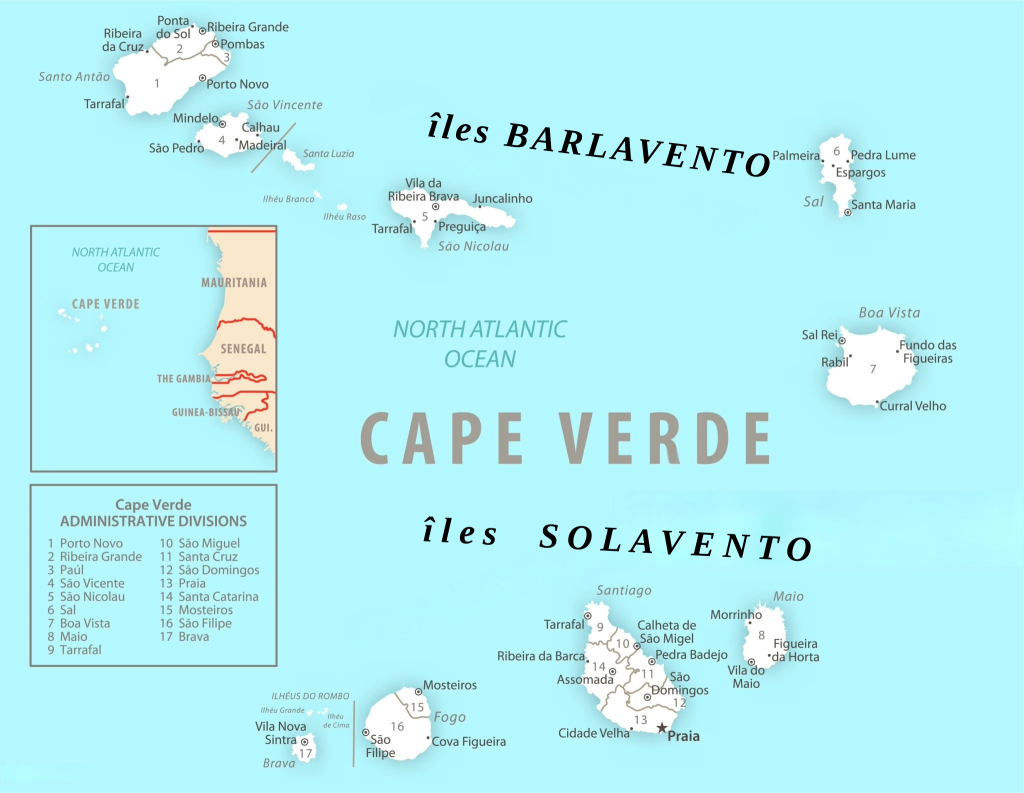
The 10 main islands will hold no more secrets for you.
“With this travel guide, plan a trip that feels like yours.”



What to see and do in Cape Verde
Ten islands, ten different trips. Start with the interactive map if you don’t know where to go yet, with the table further down if you want to compare, or with the list of must-sees if you just want the essentials.
Sights, viewpoints, beaches, heritage, towns and villages: an interactive map you can filter by type or by island, with the full list underneath.
Open the map →Plan, pick your dates, map out your route



The islands of Cape Verde, one by one
They fall into two groups that every Cape Verdean will name before even mentioning an island.
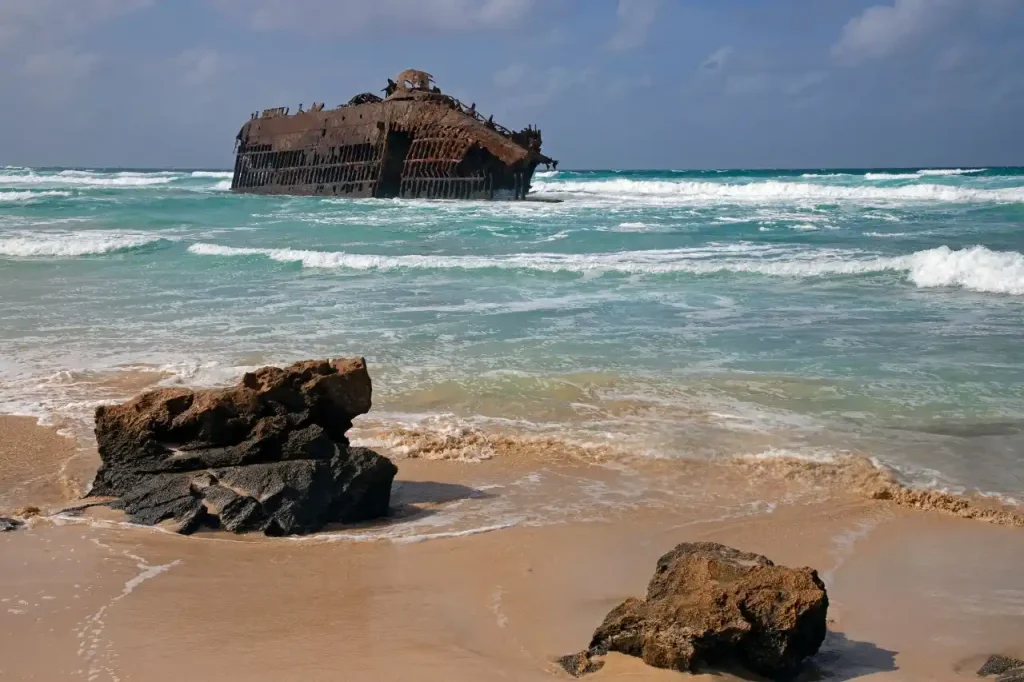
Barlavento
The windward islands · in the north
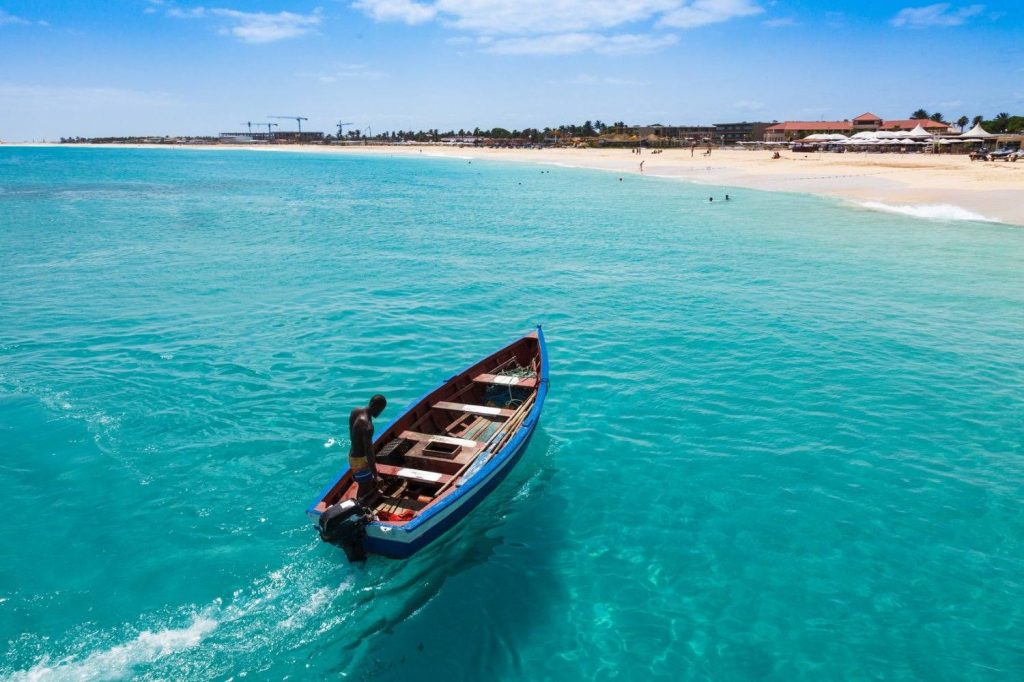


Sotavento
The leeward islands · in the south

The ten islands of Cape Verde in one table
What each one offers, and which you can reach without a boat.
| Island | Group | What you go there for | Airport |
|---|---|---|---|
| Santo Antão | Barlavento | Terraced farmland valleys and the finest trails in the country. The Estrada da Corda, the Ribeira de Paúl, grogue. | no · ferry |
| São Vicente | Barlavento | Mindelo, its bay and its music scene. Carnival, morna, the bars and the municipal market. | yes |
| Santa Luzia | Barlavento | Nobody. A strict nature reserve, uninhabited, visible from São Vicente. | uninhabited |
| São Nicolau | Barlavento | Quiet, rural mountains: Monte Gordo park, Carbeirinho, Vila da Ribeira Brava. | yes |
| Sal | Barlavento | Beach, wind and watersports. Santa Maria, its pier, the Pedra de Lume salt pans. | yes · international |
| Boa Vista | Barlavento | The longest beaches in the archipelago, dunes, turtles. Santa Mónica, Sal Rei. | yes · international |
| Maio | Sotavento | Emptiness. Miles of deserted beaches, salt pans and tiny villages. | yes |
| Santiago | Sotavento | History and city life: Praia and its Platô, UNESCO-listed Cidade Velha, the Serra da Malagueta. | yes · international |
| Fogo | Sotavento | The volcano. The inhabited caldera of Chã das Caldeiras, the climb up the Pico, colonial São Filipe. | yes |
| Brava | Sotavento | The smallest and greenest. Nova Sintra, its pastel houses and its tropical garden. | no · boat |
Why write a travel guide to Cape Verde?
Cape Verde is not a destination you pick by chance, and few people come back indifferent. There is the sea and everything it holds, trails that drop a thousand metres straight to the ocean, beaches that belong to no one — and above all morabeza, the Creole word for a kind of hospitality that no translation quite captures.
Information on the archipelago is scattered, often out of date, and rarely gathered in one place. The idea behind this guide is simple: bring together everything you need to go, in one place — the islands one by one, the hikes, the itineraries, the practical side, the map, the phrasebook. And keep it up to date, which a guidebook printed two years ago can’t do.
Where is Cape Verde?
Cape Verde is an Atlantic archipelago sitting about 600 kilometres off the coast of Senegal, opposite the westernmost point of Africa. Ten main islands, of which nine are inhabited — Santa Luzia is an uninhabited nature reserve — for just 4,033 km² of land, scattered across nearly three hundred kilometres of ocean. That scattering is what gives the country its whole character: you don’t drive around it, you sail and you fly.
These islands were completely uninhabited when the Portuguese landed in 1460. Nothing you find here today — the language, the music, the food, the faces — existed before. Cidade Velha, founded in 1462 on the island of Santiago, became the first colonial town built by Europeans in the tropics and one of the great ports of the Atlantic slave trade; today it is the country’s only UNESCO World Heritage Site. Out of that history came Cape Verdean Creole, a language in its own right, while Portuguese remains the official language. The country has been independent since 1975.
Cape Verde in a few figures
Why go to Cape Verde, and when to give it a miss
No destination is for everyone. Better to say so before you book.
What makes the trip a success
- Instant change of scenery, six hours from Europe. No real jet lag, and an entire cultural continent to discover.
- Nine islands, nine trips. You go from dunes to volcano, and from thousand-metre ridges to beaches, in a flight of a few dozen minutes.
- The climate. A dry season from November to July, sunshine almost all year round, and rarely any extreme heat thanks to the trade winds.
- The hiking. Santo Antão and Fogo rank among the finest walking country in the Atlantic, and are still little visited.
- The welcome. The morabeza is not a brochure slogan: you feel it from the very first village.
- The cost. Daily life costs roughly half what it does in Western Europe, beach resorts aside.
What can disappoint
- Every island costs you in transport. Adding an island means half a day of transfers and one more flight. A short trip stops at two islands.
- The wind. It blows nearly all year round: great for kitesurfing, less so for sunbathing, and it’s the wind that decides whether the boat sails.
- Swimming isn’t possible everywhere. Santo Antão, Fogo, Brava and São Nicolau have few accessible beaches, and they’re often dangerous.
- There is no mountain rescue service. On exposed trails you start early, carry water and tell someone where you’re going.
- Infrastructure is uneven. Outside Sal, Boa Vista and Praia, you’ll be staying in family-run guesthouses, often with no card payment.
- Tap water isn’t drinkable. Plan on bottled water everywhere, including for brushing your teeth.
When to go, how much it costs, how to get there
The three questions that always come first. The full details are in the practical handbook.
When to go to Cape Verde
The archipelago can be visited all year round. The dry season runs from November to July, with steady wind from December to March — the best time for kitesurfing and windsurfing, a little less so for lying on a beach. From August to October, it’s hotter and more humid, with brief showers: it’s also the greenest time of year, and by far the best for hiking in Santo Antão. Book well ahead if you’re aiming for June to August, when the diaspora comes home. The seven-day forecast gives you the detail for the days ahead.
How much a trip to Cape Verde costs
The cost of living is roughly half that of Western Europe, with the exception of some establishments on the beach islands. For two people, count per day:
For eight days, that gives a range of €480 backpacker-style to €1,200. On top of that come excursions, car hire and above all the transfers between islands — the budget line everyone underestimates. Two taxes are added to overnight stays: a tourist tax of 276 CVE (about €2.50) per person per night, capped at ten nights, and 15% VAT that isn’t always included in the displayed prices.
How to get to Cape Verde
The country has four international airports : Sal, Boa Vista, Praia and São Vicente. Direct flights connect Europe with Sal, Boa Vista and Praia. From there, seven islands are linked to each other by plane, and two — Santo Antão and Brava — only by boat.
As for entry requirements: for stays of under thirty days, citizens of the EU, the UK, the US and Canada don’t need a visa, but online pre-registration is compulsory, no later than five days before departure, with an airport tax to pay at the same time. Your passport must be valid for at least six months beyond your return date. These rules change: check them when you book.
What people ask most often about Cape Verde
Where is Cape Verde?
In the Atlantic Ocean, about 600 km off the coast of Senegal, opposite the westernmost point of Africa. It’s an archipelago of ten main islands, nine of them inhabited, with 4,033 km² of land spread across nearly three hundred kilometres of ocean. The country has been independent since 1975; its capital is Praia, on the island of Santiago.
Which Cape Verde island should you choose?
It depends entirely on what you’re after, because the islands aren’t playing in the same league. Sal and Boa Vista for beaches and watersports. Santo Antão and Fogo for hiking and mountains. Santiago for history and city life. São Vicente for music and the atmosphere of Mindelo. Maio, São Nicolau and Brava for peace and quiet.
If you only remember one rule: with a week, pick two islands, not three.
When is the best time to visit Cape Verde?
The dry season, from November to July, with steady wind from December to March. From August to October it’s hotter and more humid, with brief showers — it’s the greenest time of year and the best for hiking. Strictly speaking there’s no bad season: air temperatures stay between 22 and 30 °C all year round.
Do you need a visa for Cape Verde?
Not for stays of under thirty days, if you’re a citizen of the EU, the UK, the US or Canada. However, online pre-registration is compulsory before departure, no later than five days ahead, with an airport tax to pay at that point. Your passport must remain valid for six months beyond your return date. These conditions change: check them with official sources when you book.
What language is spoken in Cape Verde?
Two languages coexist. Cape Verdean Creole is the everyday language: its vocabulary comes from Portuguese, its grammar from West African languages, and it varies noticeably between the northern and southern islands. Portuguese is the official language, used in schools, government and on road signs. Worth knowing: French is taught in secondary school and many Cape Verdeans speak it.
What currency is used in Cape Verde?
TheCape Verdean escudo (CVE), pegged to the euro: roughly 110 CVE to €1. Because the rate is fixed, there are no nasty surprises on exchange. Bank cards work in towns and tourist establishments, but many family-run guesthouses and restaurants take cash only — carry cash as soon as you leave Sal, Boa Vista or Praia.
How long do you need to visit Cape Verde?
A week is enough to see two islandsproperly, no more: each extra island costs half a day in transfers. The pair that pays off best is São Vicente and Santo Antão, linked by a one-hour ferry — the seven-day itinerary is built on exactly that logic.
Two weeks open up the grand tour, with four or five islands. Beyond three weeks, you can reach the islands with few flights: São Nicolau, Maio and Brava.
Is Cape Verde a safe destination?
The country is politically stable and one of the most solid democracies in West Africa. The precautions are the same as on any trip: keep an eye on your belongings in towns and on busy beaches. Two things do deserve particular care, though: tap water isn’t drinkable, and there is no mountain rescue service. On exposed trails, start early, carry enough water and tell someone your route.